Study in Australia 2026: Visa, Costs, Scholarships and Post-Study Work Rights
Study in Australia 2026: Visa, Costs, Scholarships & Work Rights

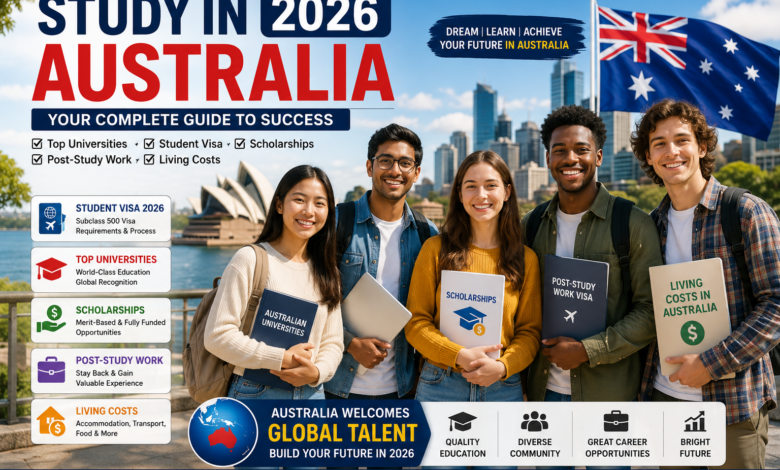
Planning to study in Australia in 2026 requires more than simply picking a university and booking a flight. Visa rules have tightened, financial thresholds have risen, and post-study work conditions have been restructured. Students from Nigeria, India, Kenya, Pakistan, the Philippines, and dozens of other countries still choose Australia every year and for good reason but the landscape demands clear-eyed preparation.
RECOMMENDED POST: Study in Germany for International Students 2026: Tuition-Free Universities, DAAD Scholarships & Visa Guide
This guide pulls together everything you need to know for the 2026 intake: the exact bank balance requirements for your Subclass 500 visa, which universities and courses give you the strongest outcomes, how to apply for competitive scholarships, what the real monthly living costs look like city by city, and how post-study work rights have changed. No recycled advice, no surface-level summaries — just practical, current information to help you make a well-informed decision.
Why Study in Australia in 2026: What Still Makes It Worth It
Australia’s appeal has not faded. Seven of its universities sit in the global top 100, and the education system is built around practical learning, critical thinking, and deep industry connections. The Tertiary Education Quality and Standards Agency (TEQSA) monitors every registered provider, which means a qualification from an Australian institution carries weight in most international job markets.
The country also offers something harder to quantify: a multicultural student environment where over 140 nationalities study side by side. Cities like Melbourne, Brisbane, and Adelaide consistently rank among the world’s most livable. That quality of life, combined with genuine post-study work opportunities and diverse scholarship options, is why Australia remains a top-three study destination globally.
What has changed for 2026 is the gatekeeping. The Australian government is actively prioritising genuine students with coherent academic and career intentions. Visa assessments are more detailed, financial requirements are higher, and post-study work durations have been restructured. Students who understand these changes and plan accordingly are in a strong position. Those who arrive underprepared — financially or documentarily face real risk of delays or refusal.
Key Reasons Students Choose Australia in 2026
- Globally recognised qualifications underpinned by TEQSA quality assurance
- Work rights of up to 48 hours per fortnight during study, unlimited during breaks
- Clear post-study work pathways through the Temporary Graduate visa (Subclass 485)
- Government and university scholarships that can significantly reduce costs
- Strong employment demand in nursing, IT, engineering, cybersecurity, and public health
- Regional study incentives that provide additional post-study work rights and migration advantages
- Safe, multicultural cities with well-developed international student support systems
Top Universities to Study in Australia 2026: Choosing the Right Institution
Australia has over 40 universities. The Group of Eight (Go8) leads in research reputation and global rankings, but non-Go8 and regional institutions often offer better value for international students — lower tuition, smaller class sizes, and stronger migration incentives for those who want to stay post-graduation.
When selecting a university, prioritise course relevance and industry connections over brand recognition alone. A mid-ranked institution with strong clinical placement networks, active employer partnerships, or a track record in your specific field can outperform a prestigious institution where international students are a small fraction of a very large cohort.
| University | Location | Key Strengths | Est. Annual Tuition (AUD, Master’s) |
| University of Melbourne | Melbourne | Medicine, Law, Business Analytics, Public Health | AUD 45,000 – 55,000 |
| University of Sydney | Sydney | Health Sciences, Engineering, Finance, Data Science | AUD 46,000 – 60,000 |
| Australian National University | Canberra | Politics, International Relations, Environmental Science | AUD 43,000 – 52,000 |
| University of Queensland | Brisbane | Biotechnology, Engineering, Veterinary, Tourism | AUD 40,000 – 50,000 |
| UNSW Sydney | Sydney | Renewable Energy, Cybersecurity, Business Technology | AUD 47,000 – 58,000 |
| Monash University | Melbourne | Pharmacy, IT, Sustainable Development, Business | AUD 45,000 – 55,000 |
| University of Adelaide | Adelaide | Engineering, Health, Environmental Sciences | AUD 38,000 – 45,000 |
| Deakin University | Geelong / Melbourne | Nursing, Sports Science, IT (regional campus option) | AUD 33,000 – 39,000 |
| University of Tasmania | Hobart / Launceston | Marine Science, Antarctic Studies (regional option) | AUD 32,000 – 38,000 |
Which Courses Are Best for International Students in 2026
Course selection affects both your employability and your visa outcomes. Programs that align with Australia’s skilled occupation lists offer better prospects for post-study work and long-term migration pathways. The most in-demand fields in 2026 include:
- Nursing and allied health (consistently high employment demand nationwide)
- Information technology and cybersecurity (tech sector growing under the Digital Economy Strategy)
- Data analytics and data science
- Engineering (civil, electrical, mechanical, environmental)
- Education and early childhood education
- Accounting and financial management
- Social work and community services
- Construction management
- Environmental science and renewable energy
- Public health and health policy
A note on course coherence: your chosen program should logically connect to your previous education and stated career goals. A software engineer applying for a master’s in data science can explain the natural progression. An accountant switching to hospitality management without a clear career rationale needs a much stronger statement. Course mismatch does not automatically trigger refusal, but weak justification creates visible gaps in your Genuine Student assessment.
Australia Student Visa Subclass 500 Requirements in 2026
The Subclass 500 student visa is the primary pathway for full-time international study at CRICOS-registered providers. The requirements have evolved significantly in recent years, and 2026 applicants will encounter a stricter assessment environment than the cohorts that preceded them.
Before applying for the visa, you must receive a Confirmation of Enrolment (CoE) from your chosen institution. This document is issued after you accept an offer and pay the initial tuition deposit. The CoE is a prerequisite for the visa application — do not leave this step to the last minute, as some universities take several weeks to process it.
Genuine Student Requirement: The Most Important Change for 2026
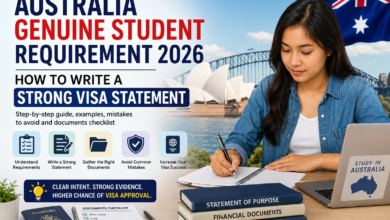
The Genuine Student (GS) requirement replaced the old Genuine Temporary Entrant (GTE) statement and is now fully embedded in the visa assessment process. Rather than submitting a freeform personal statement, you answer a structured set of targeted questions online. These questions explore:
- Your current circumstances, including family, employment, and community ties to your home country
- Why you chose this specific course and institution over alternatives
- How the qualification connects to your previous academic or professional background
- Your intended career path after completing the course
- Your immigration history, including any previous applications to Australia or other countries
Generic answers are the fastest route to refusal. A software engineer applying for a Master of Data Science should explain the specific skill gap they encountered in practice, name the industry problem they want to solve, and describe how particular modules in the program address that need. A panel reading a thousand similar applications will notice immediately when an answer sounds copied from a course brochure.
English Language Requirements for Study in Australia 2026
Most undergraduate and postgraduate programs require IELTS Academic with an overall score of at least 6.5, with no individual band below 6.0. Research programs and health sciences often require 7.0 overall. For foundation and pathway programs, the minimum is now 6.0 overall — a change from the previous 5.5 threshold. Check your specific institution and program for exact requirements, as they vary.
| Test | Typical Minimum (Undergraduate / Postgraduate) | Notes |
| IELTS Academic | 6.0 – 6.5 overall / 7.0 for health sciences | No individual band below 6.0 |
| PTE Academic | 58 – 65 overall | Component minimums apply |
| TOEFL iBT | 79 – 94 overall | Component minimums apply |
| Cambridge English | C1 Advanced or equivalent | Specific band requirements by institution |
English test results are valid for two years. If your score expires between your university application and visa lodgement, you will need to sit the test again. Plan your test date with this in mind.
Health, Character and OSHC Requirements
Overseas Student Health Cover (OSHC) is mandatory for the entire duration of your Subclass 500 visa — not just the length of your course. Purchase a policy from an approved provider before lodging your visa application, and ensure coverage runs to the end of your visa, not just your semester dates. Cheap out here and you will receive a request for further information that delays everything.
Health examinations may be required depending on your country of origin or the nature of your course. Medical checks must be completed by approved panel physicians. Character requirements include police clearance certificates for any country where you have lived for 12 months or more within the past 10 years.
| Visa Application Fee (2026): The Subclass 500 student visa application fee starts from AUD 2,000 for the main applicant. Fees for dependants are additional. Processing times vary significantly by country and provider risk profile — apply as early as possible, particularly if you are from a country with longer standard processing times. |
Financial Proof and Documents to Study in Australia 2026
Financial capacity is one of the most misunderstood aspects of the Australian student visa, and it is where a large proportion of avoidable refusals happen. The Department of Home Affairs requires you to demonstrate that you can cover tuition, living expenses, travel, and OSHC — not just meet a minimum savings threshold.
How Much Bank Balance Is Required for an Australia Student Visa in 2026
For the 2026 intake, the living cost financial capacity figure referenced across official and migration sources is AUD 29,710 per year for a single student. Given annual adjustments, budgeting AUD 31,000 is more prudent. This is the living cost component only — you must add it to your full first-year tuition fees and travel costs.
| Worked Example: Two-year Master of Information Technology at a mid-tier university. Tuition: AUD 38,000 per year. Living costs: AUD 31,000. Travel: AUD 2,500. Total funds to demonstrate: approximately AUD 71,500. At current exchange rates this is roughly INR 38.5 lakhs, USD 46,000, or PHP 2.6 million — verify at time of application. |
| Applicant Category | Annual Living Cost Requirement (AUD) |
| Single student | AUD 29,710 (budget AUD 31,000 for safety margin) |
| Accompanying partner | Add AUD 10,394 per year |
| Each dependent child | Add AUD 4,449 per year |
| Travel costs (single applicant) | Approximately AUD 2,000 – 3,000 |
These figures must be added to your first-year tuition. If your course is shorter than 12 months, you demonstrate funds for the full course duration. The money must be genuinely accessible — shares, property, or locked term deposits will not qualify unless easily liquidable with documented evidence.
What Counts as Acceptable Financial Evidence
The following are generally accepted as proof of financial capacity. The strongest applications use two or more of these in combination:
- Personal bank statements showing consistent balances maintained for at least three months
- Education loan sanction letter from an approved financial institution, clearly showing disbursable amount
- Fixed deposit certificates (only if funds are readily accessible, not locked beyond your departure date)
- Scholarship award letter specifying exact amount, duration, and expenses covered
- Parental or spousal sponsorship with an affidavit of support, proof of relationship, and the sponsor’s own financial documents
Sudden large deposits without explanation are a red flag. If a parent transferred funds or you sold an asset, document the transaction clearly — include sale agreements, bank transfer records, or business income records. Visa officers look for consistency and traceability. A savings history that shows gradual accumulation is always more convincing than a lump sum that appeared weeks before application.
One practical tip that is often overlooked: show funds approximately 10 to 15 percent above the calculated minimum. Exchange rate fluctuations between your home currency and the Australian dollar can reduce your apparent balance during the assessment period. A buffer protects against this.
Scholarships to Study in Australia 2026: Government and University Options
Scholarships will not cover every student’s costs, but they can meaningfully reduce the financial burden if you research early and apply strategically. The key mistake most applicants make is discovering scholarships after they have already committed to a course and a start date. Scholarship deadlines frequently close months before the academic year begins.
Australia Awards Scholarships: The Fully Funded Government Option
Australia Awards Scholarships are administered by the Department of Foreign Affairs and Trade and represent the most comprehensive government-funded pathway for students from eligible developing countries. Awards typically cover full tuition fees, return airfares, living expenses, and OSHC for the full duration of study.
Selection emphasises leadership potential, development relevance, and a credible plan to return home and contribute to your country’s development — very similar in philosophy to the Commonwealth Scholarship. Application windows open country by country, usually 12 months before the intended start date. If your country is eligible, this should be your first port of call before any other scholarship.
Destination Australia Program
This government-funded program supports international students who choose to study at regional campuses. Awards of up to AUD 15,000 per year are available for eligible students at participating regional institutions. Eligible regional areas include Geelong, Wollongong, Newcastle, Hobart, Townsville, and many parts of Queensland, South Australia, and regional Victoria.
Beyond the financial support, regional study also unlocks additional post-study work rights — more on this in the post-study section below. The combination of scholarship funding and extended work rights makes regional study a strategically strong option for students who are flexible about location.
University Scholarships for International Students in 2026
Almost every Australian university offers merit-based scholarships for international students. Coverage ranges from 20 percent to 100 percent of tuition fees. Some are automatically assessed on application; others require a separate submission. Key examples:
| Scholarship | University | Value |
| International Undergraduate Scholarship | University of Melbourne | Up to 100% tuition fee remission |
| International Academic Scholarships | UNSW Sydney | Up to AUD 10,000 per year |
| International Leadership Scholarship | Monash University | 100% course fees |
| Global Academic Excellence Scholarship | University of Adelaide | 50% tuition fee reduction |
| Vice-Chancellor’s International Scholarship | Deakin University | 50 – 100% tuition fee waiver |
| Destination Australia (Deakin Geelong) | Deakin University | Up to AUD 15,000 per year (government) |
Research Training Program Scholarships
If you are planning a research master’s or PhD, the Research Training Program (RTP) provides tuition fee offsets and a living stipend. Applications are made directly to universities. The RTP is highly competitive — strong research proposals, publications, and supervisor alignment matter significantly. Reach out to potential supervisors before applying. A written expression of interest from a faculty member strengthens your application considerably.
Cost of Living in Australia for Students in 2026: City-by-City Breakdown
The official living cost benchmark of AUD 29,710 per year translates to roughly AUD 2,476 per month. In Sydney or Melbourne, that figure will feel tight. In Adelaide, Hobart, or regional areas, it is more workable. Your actual monthly spend depends on accommodation type, food habits, transport choices, and lifestyle — but the breakdown below gives you a realistic baseline.
| Expense | Sydney (AUD/month) | Melbourne (AUD/month) | Brisbane (AUD/month) | Adelaide / Perth (AUD/month) | Hobart / Regional (AUD/month) |
| Shared accommodation (incl. bills) | 1,300 – 1,800 | 1,100 – 1,600 | 900 – 1,400 | 800 – 1,200 | 700 – 1,000 |
| Food and groceries | 400 – 600 | 380 – 550 | 350 – 500 | 300 – 450 | 280 – 430 |
| Public transport (with student card) | 150 – 200 | 140 – 180 | 120 – 160 | 100 – 140 | 80 – 120 |
| Phone and internet | 50 – 80 | 50 – 80 | 50 – 70 | 50 – 70 | 50 – 70 |
| Entertainment and personal | 200 – 400 | 180 – 350 | 150 – 300 | 130 – 250 | 120 – 200 |
| TOTAL MONTHLY (approx.) | 2,100 – 3,080 | 1,850 – 2,760 | 1,570 – 2,430 | 1,380 – 2,110 | 1,230 – 1,820 |
These figures assume house-sharing, home cooking for most meals, and use of student public transport concessions. A one-bedroom apartment in inner Sydney can push accommodation costs past AUD 2,500 per month on its own. Sharing is the norm for international students on a budget.
First-Month Costs: What Students Often Miss
Your first month will cost significantly more than your average monthly budget. Plan for a bond payment of four weeks’ rent, two weeks’ rent in advance, basic furniture if the property is unfurnished, and setup costs like a local SIM card, transport card, and initial grocery stock. Budget an additional AUD 2,000 to AUD 4,000 for this settlement period on top of your regular monthly estimate.
University Accommodation vs Private Rentals
On-campus or university-managed accommodation costs between AUD 300 and AUD 600 per week depending on the institution and room type, but usually includes utilities and internet. The main advantage is proximity to campus, immediate community, and reduced administrative hassle in your first weeks. Many universities guarantee accommodation for first-year international students if applications are submitted before specified deadlines — check these dates early, as they can close months before semester start.
Private shared accommodation through platforms like Flatmates.com.au, Gumtree, and university housing boards runs AUD 180 to AUD 350 per week for a room in a shared house. Always inspect a property before signing a lease. Scam listings are present on unmoderated platforms. Never transfer money for accommodation you have not seen, and never sign a lease without reading the terms carefully.
Post-Study Work Rights in Australia 2026: What Has Changed
Post-study work is one of the primary draws for international students choosing Australia, and understanding the current rules is essential before you commit to a course and institution. The Temporary Graduate visa (Subclass 485) has undergone significant changes since 2024, and the previous understanding — that certain master’s degrees in IT or engineering could get you four years of work rights — no longer applies.
Subclass 485 Visa Duration in 2026
| Qualification Level | Post-Study Work Duration (Subclass 485) |
| Bachelor’s degree (including honours) | 2 years |
| Master’s by coursework | 2 years |
| Master’s by research | 3 years |
| PhD (Doctoral degree) | 3 years |
| Associate degree or diploma (Post-Vocational stream) | Up to 18 months |
The previous extended durations for select degrees in skill-shortage areas were scrapped in mid-2024. The age limit is now 35 at the time of application, with limited exceptions for PhD graduates and certain passport holders. English language requirements have also increased for some application streams.
Regional Study Bonus for Post-Study Work in Australia
This is one of the most valuable strategic options for 2026 applicants. Students who complete their degree at a regional campus classified as Category 2 or Category 3 can qualify for an additional one to two years on a second Subclass 485 visa. In practice, this means:
- A master’s by coursework at Deakin’s Geelong campus: 2 years on the first 485, plus potentially 1 to 2 additional years by continuing to reside in a regional area
- A PhD at University of Tasmania (Hobart): 3 years on the first 485, plus additional regional work rights
- Regional institutions include the University of Adelaide, University of Tasmania, Deakin University, Griffith University, and several others
This regional bonus also feeds into skilled migration pathways. The Subclass 491 (Skilled Work Regional visa) has lower points requirements and faster processing than the general Subclass 189 and 190 pathways, making regional study a smart long-term play for students with migration aspirations. Consult a registered migration agent for specific occupation and points advice relevant to your situation.
Pathways to Permanent Residency After Studying in Australia
Permanent residency is not guaranteed but is achievable for students who plan strategically. Key pathways include:
- General Skilled Migration (Subclass 189 / 190 / 491): Points-based, occupation must be on the relevant list, skills assessment required
- Employer Sponsorship (Subclass 482 / 186): Requires employer willing to sponsor, relevant occupation and experience
- State and Territory Nomination: Regional governments nominate based on state-specific skill needs, often with lower point thresholds
- Australian qualifications and regional study provide bonus points in the points test
Immigration policy changes regularly. Verify requirements on the official Department of Home Affairs website and consult a registered migration agent before making long-term residency plans based on current rules.
Study in Australia vs Canada in 2026: Which Is the Better Choice
This comparison comes up constantly among students from Africa, South Asia, and Southeast Asia. The honest answer is that neither country is universally better — the right choice depends on your field, budget, long-term immigration goals, and lifestyle preferences.
| Factor | Study in Australia 2026 | Canada 2026 |
| Post-study work rights | 2 – 3 years (Subclass 485), longer with regional study | Post-Graduation Work Permit, often 3 years for a 2-year program |
| Work during studies | 48 hrs per fortnight during study, unlimited during breaks | Subject to recent policy changes — verify current rules |
| Tuition fees | AUD 32,000 – 60,000 per year depending on level and city | CAD 20,000 – 40,000 per year at most institutions |
| Living costs | High in Sydney/Melbourne, moderate in regional areas | High in Toronto/Vancouver, lower in smaller provinces |
| Climate | Warm to hot in most cities year-round | Cold winters in most provinces |
| Pathway to PR | Points-based (189/190/491), occupation list dependent | Express Entry, PNP, multiple streams |
| English test required? | Yes — IELTS, PTE, TOEFL, or Cambridge | Yes — IELTS, CELPIP, TEF for French programs |
| Best suited for | Health, IT, engineering, research, regional ambitions | Business, IT, trades, North American career positioning |
If post-study work rights are your primary concern and your occupation is in demand in Australia, the regional study pathway can give you more total working time in Australia than Canada’s standard post-graduation permit. If permanent residency speed matters most and your occupation has strong Express Entry draw in Canada, that may tip the balance the other way. Run the numbers for your specific field before deciding.
How to Study in Australia 2026: Step-by-Step Application Process
- Choose your course based on career goal and skilled occupation alignment, not just institution prestige or ease of entry
- Check CRICOS registration of your chosen institution to confirm it is approved for international student enrolment
- Review academic and English language entry requirements for your specific program
- Prepare admission documents: transcripts, degree certificate, English test results, statement of purpose, recommendation letters, and CV
- Submit your university application and negotiate a conditional or unconditional offer
- Accept the offer, pay the required tuition deposit, and receive your Confirmation of Enrolment (CoE)
- Purchase Overseas Student Health Cover for the full visa duration
- Compile financial evidence: bank statements (at least 3 months consistent balance), loan letters, scholarship letters, and sponsor documents if applicable
- Prepare your Genuine Student responses — answer each question specifically with reference to your background, chosen course, and post-graduation plan
- Lodge your Subclass 500 visa application with all required documents
- Book your health examination with an approved panel physician if required for your nationality
- Arrange accommodation at least 3 to 6 months before arrival — university-managed housing for first year if available
- Prepare for arrival: budget AUD 2,000 to AUD 4,000 for first-month setup costs
Expert Tips for a Strong Study in Australia 2026 Application
On Your Genuine Student Statement
Write your Genuine Student responses like a coherent professional narrative. Show the logical chain: what you studied, what gap or opportunity emerged in your career, why this specific course at this specific university fills that gap, and how the qualification connects to a concrete post-graduation plan in your field. Reference real company names, specific industries, or named career roles. Assessors reading generic answers recognise the template immediately.
On Financial Documentation
Show funds approximately 10 to 15 percent above the calculated minimum to account for exchange rate movement. If parents are sponsoring you, include a notarised affidavit of support, relationship evidence, and your parents’ bank statements. A sanction letter alone is not enough if the loan is not yet disbursable — the funds must be demonstrably accessible before you travel.
On Course and Institution Selection
Regional universities — particularly those in the Destination Australia program — offer a genuinely compelling combination of lower tuition fees, smaller class sizes, scholarship support, and additional post-study work rights. Deakin (Geelong), University of Tasmania (Hobart and Launceston), and Central Queensland University are worth serious consideration if your course is available there.
On Timing
Start your research 9 to 12 months before your intended start date. Apply to universities early — preferred scholarship rounds for many institutions open five to six months before semester intake. OSHC must be purchased before lodging your visa. Medical examinations should be booked before visa lodgement where possible, as front-loading speeds up processing. The further in advance you move through each stage, the fewer time-pressure mistakes you make.
Common Mistakes to Avoid When You Study in Australia 2026
Financial Mistakes
- Showing exactly the minimum required funds with no buffer for exchange rate fluctuation
- Unexplained large deposits shortly before application — always document the source of funds
- Relying on part-time work as a primary financial plan — jobs take weeks or months to secure after arrival
- Underestimating first-month setup costs, which routinely reach AUD 2,000 to AUD 4,000 above regular monthly expenses
Visa and Document Mistakes
- Submitting a weak or generic Genuine Student statement that reads like a course brochure
- Purchasing OSHC for course duration only instead of the full visa period
- Allowing English test scores to expire between university application and visa lodgement
- Choosing a high-refusal-rate private college over a public university to save on tuition
- Failing to update the Department of Home Affairs within 7 days of an address or enrolment change
Academic and Career Mistakes
- Selecting a course with no coherent link to previous study or work experience without a strong written explanation
- Ignoring post-study visa changes when choosing course duration — a two-year coursework master’s now gives only 2 years on the 485, not four
- Not engaging with university support services — tutoring, writing centres, career advisors, and counselling are available and improve outcomes
- Underestimating the adjustment to Australian academic culture, which values critical debate and independent analysis over memorisation
People Also Ask: Study in Australia 2026
How much bank balance is required for an Australia student visa in 2026?
You need to demonstrate funds covering first-year tuition, AUD 29,710 in living costs (budget AUD 31,000 for safety), and approximately AUD 2,000 to AUD 3,000 for travel. For a two-year master’s with annual tuition of AUD 38,000, total required funds are approximately AUD 71,500. Funds must be liquid, traceable, and demonstrably accessible — not locked in term deposits or tied up in property. If bringing a partner, add AUD 10,394 per year; each dependent child adds AUD 4,449 per year.
Can I work while studying in Australia on a student visa?
Yes. Subclass 500 holders can work up to 48 hours per fortnight while enrolled and in session, and unlimited hours during scheduled course breaks. All paid employment counts toward this limit across all employers — casual, part-time, internship, or freelance. Master’s by research and doctoral students have no fortnightly hour limit after their course starts. Exceeding work hour limits can trigger visa cancellation. Track your hours carefully if working for multiple employers.
What is the Subclass 500 student visa?
The Subclass 500 is Australia’s primary student visa for full-time international study at CRICOS-registered providers. It allows you to stay for the duration of your course (up to five years), travel in and out of Australia while the visa is valid, include eligible family members, and work within the permitted hour conditions. The visa was introduced in 2016 to consolidate previous student visa categories into a single streamlined framework.
Is Australia better than Canada for international students in 2026?
It depends on your field, budget, and long-term goals. Australia offers stronger post-study work rights for certain health, engineering, and IT graduates and provides regional study incentives that can meaningfully extend work rights and improve migration pathways. Canada’s Express Entry system offers a more transparent and often faster pathway to permanent residency. Living costs are high in both countries’ major cities. For healthcare and STEM graduates with migration aspirations, Australia’s regional pathway is particularly competitive. For students targeting North American careers or Express Entry PR, Canada may be more advantageous.
Do I need IELTS to study in Australia in 2026?
Most institutions require an approved English language test for international applicants who did not complete prior education in English. IELTS Academic, PTE Academic, TOEFL iBT, and Cambridge English are all widely accepted. Some universities waive the requirement if your degree was taught entirely in English. For the visa, applicants from certain passport countries may be exempt. Check both the university’s admission requirements and the visa-level requirement separately, as they are different assessments.
Can I bring my family to Australia on a student visa?
Yes, with conditions. Research master’s and PhD students may include family members immediately upon visa grant. Students in coursework master’s and bachelor’s programs starting after mid-2024 face tighter restrictions — partners are generally not eligible as subsequent entrants unless you are studying a designated critical course. In 2026, only students in research degrees and certain high-priority fields can include dependants without restriction. Check the current legislative instrument before making family relocation plans.
Frequently Asked Questions About Studying in Australia 2026
What is the best course to study in Australia in 2026?
There is no single best course — the right choice depends on your academic background and career goals. Nursing, cybersecurity, data analytics, engineering, and social work are among the most employment-ready fields with strong demand. For migration purposes, courses in occupations on Australia’s skilled occupation list provide the clearest post-study pathways.
Are there fully funded scholarships available for international students in Australia?
Yes. Australia Awards Scholarships provide comprehensive funding including tuition, airfares, living expenses, and OSHC for eligible students from partner developing countries. Research Training Program scholarships fund tuition and stipends for PhD and research master’s students at Australian universities. University-level merit scholarships offer partial to full tuition fee waivers at most institutions.
How long can I stay in Australia on a student visa?
The Subclass 500 visa covers the duration of your course, typically up to a maximum of five years. The visa also includes a short period beyond course completion to allow you to apply for the Temporary Graduate visa if eligible, or to depart Australia. For longer programs, the visa may be extended.
What support is available for international students in Australia?
Australian universities offer extensive support including academic skills workshops, English language assistance, mental health counselling, peer mentoring, housing assistance, visa guidance, and emergency financial support. The ESOS Act and National Code of Practice provide legal protections for international students that universities are required to uphold. Australia’s Fair Work Ombudsman also protects international students’ workplace rights.
How do I find accommodation before arriving in Australia?
Start searching three to six months before your arrival date. Apply for university-managed housing as soon as your offer is accepted many institutions guarantee housing for first-year international students on a first-come, first-served basis. For private rentals, use Flatmates.com.au, Domain.com.au, and university housing boards. Never pay a bond or rent in advance for a property you have not inspected in person or verified through a trusted local contact.
Your Next Steps to Study in Australia 2026
Choosing to study in Australia in 2026 is a significant decision that extends well beyond academic credentials. The experience develops cultural competency, builds professional networks in a globally connected economy, and provides genuine pathways to skilled work and with careful planning long-term residency.
Success requires preparation that begins well before you submit a university application. The students who navigate this process most effectively are those who understand the financial requirements before they start saving, choose their course with career and visa outcomes in mind, and build their Genuine Student case around a coherent narrative rather than a generic template.
Your Immediate Action Plan
- Shortlist five to eight courses across different providers using the StudyAustralia.gov.au course search tool — filter by CRICOS code, field, and location
- Check your current English test score validity — if it expires within 18 months, book a test now
- Calculate your total funding requirement: first-year tuition + AUD 31,000 living costs + AUD 2,500 travel + OSHC premium
- Identify two or three scholarship options relevant to your country and field and note their deadlines
- Begin drafting your statement of purpose — connect your background, chosen course, and post-graduation plan into a single coherent narrative
- Research regional campus options if post-study work duration or lower living costs are important to your plan