Canada Caregiver Jobs With Visa Sponsorship 2026
Best Websites to Find Canada Caregiver Jobs with Sponsorship

Introduction
You finished your nursing or health science programme, completed NYSC, and spent months sending applications across Lagos, Abuja, and Port Harcourt only to watch your qualifications go underutilized while the bills keep coming. Meanwhile, your WhatsApp groups are flooded with “agents” promising Canadian visas for ₦500,000 upfront.
RECOMMENDED POST: Remote Jobs Without a Degree That Pay in Dollars (2026)
Some of those offers are real. Many are not.
If you have been researching Canada caregiver jobs with visa sponsorship and you are not sure what is legitimate versus what will empty your account and leave you stranded, this guide was written for you.
What follows is an honest, structured breakdown of how caregiver immigration to Canada actually works in 2026 the real salary figures, the visa pathways, the step-by-step application process, and the specific red flags you must recognise before handing anyone a single naira. No inflated promises. No shortcuts. Just the information that actually helps people succeed.
What Are Caregiver Jobs in Canada?
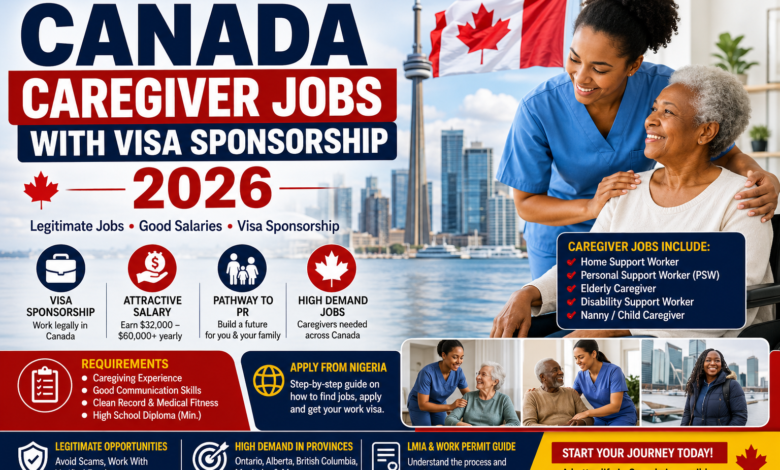
A caregiver job in Canada involves providing personal support to individuals who cannot fully manage daily living activities on their own. This includes elderly adults, people with physical or developmental disabilities, individuals recovering from illness, and children with complex care needs.
The official occupation labels used by Immigration, Refugees and Citizenship Canada (IRCC) are Home Support Worker (NOC 44101) and Home Child Care Provider (NOC 44100). These are not casual domestic help roles. They are structured, contract-bound positions that operate under Canadian labour law — meaning you receive an hourly wage, mandatory overtime in most provinces, and the same workplace protections as any other employee.
Common job titles you will see on Canadian job boards include:
- Personal Support Worker (PSW)
- Home Health Aide
- Live-In Caregiver
- Elderly Companion or Senior Care Worker
- Home Support Worker
- Nanny or Childminder
The distinction between child care providers and home support workers matters when you apply. Each has a separate visa stream, and your job offer must match the correct NOC code. Choosing the wrong one can delay or derail your application.
Why Canada Urgently Needs Foreign Caregivers in 2026
Canada’s need for caregivers is structural, not a temporary trend. Three converging pressures explain why employers are actively recruiting internationally.
An Aging Population
Approximately one in five Canadians is 65 years or older in 2026, and the proportion of seniors is growing faster than the domestic workforce can absorb. Many families prefer in-home support over institutional care — which directly increases demand for personal support workers, home health aides, and live-in caregivers.
Healthcare Staffing Shortages
Pandemic-era burnout accelerated the departure of thousands of healthcare support workers from the profession permanently. Provinces including Ontario, British Columbia, Alberta, Manitoba, and Nova Scotia now report critical shortages of PSWs in both home care and long-term care settings.
Government Immigration Policy
Canada’s immigration framework reflects this labour reality. IRCC maintains dedicated caregiver immigration pilots specifically because domestic recruitment cannot fill the gap. The government has also signalled continued intake for foreign care workers in 2026 under several provincial and federal streams.
For Nigerian applicants with any background in health sciences, domestic support, or childcare, the timing is genuinely favourable — provided you approach the process correctly.
Types of Caregiver Jobs Available in Canada
Understanding the different role categories helps you target the right positions and match the correct NOC code on your visa application.
Personal Support Worker (PSW)
The most common entry-level healthcare role in Canada. PSWs assist clients with bathing, dressing, medication reminders, and mobility. Many work in government-funded home care agencies with structured onboarding, benefits, and legal protections.
Home Support Worker
Provides in-home services including housekeeping, meal preparation, appointment support, and daily living assistance. NOC 44101 covers this classification.
Home Child Care Provider / Nanny
Canadian families hire foreign child caregivers through private household arrangements. NOC 44100 applies here. This role has its own dedicated immigration pilot separate from the home support stream.
Live-In Caregiver
Lives in the client’s household and provides round-the-clock or scheduled care. Accommodation is typically included as part of the compensation, with provincial rules governing what can be deducted from wages.
Disability Support Worker
Assists individuals with physical or developmental disabilities in residential or community settings. These roles may require additional training or certification depending on the province.
Average Caregiver Salaries in Canada — 2026 Breakdown
One of the most common questions — and the one where applicants are most frequently misled. The table below reflects realistic 2026 hourly and annual figures based on Canadian labour market data.
| Province | Hourly Rate (Entry-Level) | Hourly Rate (Experienced) | Annual Estimate (Full-Time) | Notes |
|---|---|---|---|---|
| Ontario | CAD $18–$20 | CAD $21–$26 | CAD $37,000–$52,000 | Minimum wage CAD $17.20/hr; PSW rates rising |
| British Columbia | CAD $20–$22 | CAD $23–$28 | CAD $42,000–$56,000 | High cost of living in Vancouver area |
| Alberta | CAD $19–$21 | CAD $22–$27 | CAD $40,000–$54,000 | No provincial sales tax; lower cost of living |
| Manitoba | CAD $17–$18 | CAD $19–$24 | CAD $35,000–$46,000 | Lower living costs; active PNP for caregivers |
| Nova Scotia | CAD $16.50–$20 | CAD $20–$24 | CAD $34,000–$48,000 | Smaller competition pool than Ontario |
Critical distinctions applicants often miss:
Live-In vs Live-Out: Live-in roles typically show a lower base hourly rate but come with free or subsidised accommodation. In high-rent cities like Toronto or Vancouver, this effectively increases take-home value considerably. A one-bedroom apartment in urban Ontario averages CAD $1,800–$2,200 per month — that savings matters significantly on an entry-level salary.
Overtime: Legally mandated in all provinces. Most require time-and-a-half for hours beyond 40–44 per week.
Benefits: Government-funded agencies typically include dental, health coverage, and pension contributions. Private household employers may not.
In naira terms: Even an entry-level Ontario caregiver salary converts to well over ₦20 million annually at current exchange rates. But Canadian living costs are real — factor in rent, food, transport, and taxes before treating this as a direct comparison.
Eligibility Requirements for Canada Caregiver Jobs
Before spending money on applications or documents, know exactly where you stand.
| Requirement | Details | Notes |
|---|---|---|
| Education | Secondary school certificate minimum; post-secondary preferred | Health science, nursing, or social work backgrounds are strong assets |
| Work Experience | 6–24 months of relevant caregiving or healthcare experience | PSW, hospital aide, home helper, or domestic support all count |
| Language Proficiency | CLB 5 minimum (roughly IELTS General Training 5.0 in each band) | CLB 7 required for PR under pilot programs; higher scores improve competitiveness |
| Medical Fitness | Immigration Medical Examination (IME) by IRCC-approved panel physician | Standard for all work permit and PR applicants |
| Background Check | Police clearance certificate from Nigeria and any country lived in 6+ months | Obtained from the Nigeria Police Force or NIS |
| Travel Document | Valid Nigerian international passport, minimum 12 months remaining | Renew early if expiry is within 18 months |
| Credential Assessment | May be required for roles with clinical components | World Education Services (WES) is the standard body; takes 8–12 weeks |
A word on IELTS: Many applicants treat it as a box to tick. Canadian employers treat it as a proxy for how well you will communicate with vulnerable clients. A caregiver who cannot clearly understand a client’s needs or explain a medication schedule poses a real risk. Invest in proper preparation — aim for CLB 6 or higher where possible.
What Is LMIA and Why It Matters
LMIA stands for Labour Market Impact Assessment. It is a document issued by Employment and Social Development Canada (ESDC) that confirms a Canadian employer genuinely attempted to recruit locally, could not find a qualified Canadian citizen or permanent resident, and therefore needs to hire a foreign worker.
Think of the LMIA as the bridge between a legitimate job offer and your work permit application.
How the LMIA Process Works
- The employer advertises the position publicly and proves they genuinely tried to recruit locally.
- They apply to ESDC for an LMIA approval.
- ESDC reviews and, if satisfied, issues a positive LMIA with a reference number.
- The employer provides that LMIA number to you.
- You include it in your work permit application to IRCC.
LMIA-Exempt Pathways
Caregiver positions under the dedicated pilot programs (Home Child Care Provider Pilot and Home Support Worker Pilot) do not require a traditional LMIA. They operate under their own program criteria. Provincial Nominee Programs also have employer-driven pathways that may bypass standard LMIA requirements.
The Critical Fraud Connection
A fake LMIA letter is one of the most common fraud tools used against Nigerian job seekers. If someone is selling you an “LMIA approval” or charging you to “get an employer to process your LMIA,” stop all contact immediately. The LMIA process happens between the employer and the Canadian government. You, as the worker, pay nothing for it ever.
To verify an LMIA: a legitimate employer will provide their LMIA number and their Canada Revenue Agency (CRA) business number without hesitation. An employer who refuses to provide these specifics is not legitimate.
Canada Caregiver Visa and Immigration Pathways in 2026
Home Support Worker Pilot
This is the most relevant pathway for applicants with nursing aide, PSW, or home health backgrounds. It allows foreign nationals to work under a temporary work permit initially, then apply for permanent residence after accumulating at least 24 months of qualifying Canadian work experience in NOC 44101.
Key features:
- Employer must be a Canadian household or home care agency
- Minimum language threshold: CLB 5 for work permit; CLB 7 for PR
- Dedicated PR pathway built into the program a significant advantage over standard TFWP roles
Home Child Care Provider Pilot
Mirrors the Home Support Worker Pilot but targets caregivers providing childcare in private Canadian households. Falls under NOC 44100. Same language thresholds and 24-month qualifying period apply.
Both pilots have annual intake caps. If caps are reached, new applicants may need to wait for the next intake window. Apply early once a legitimate job offer is secured.
Express Entry and Relevant NOC Codes
Caregivers with post-secondary education and significant work experience may qualify under the Federal Skilled Worker Program or Canadian Experience Class. Relevant NOC codes include:
- NOC 44100 — Home Child Care Providers
- NOC 44101 — Home Support Workers
- NOC 32101 — Licensed Practical Nurses (for more qualified health workers)
CRS scores for caregiving NOC codes have historically been lower than tech or finance roles, meaning many caregivers receive Invitations to Apply (ITAs) at competitive score thresholds.
Provincial Nominee Programs (PNP)
Provinces actively recruit caregivers through their own nominee streams. A provincial nomination adds 600 CRS points to your Express Entry profile effectively guaranteeing an ITA for permanent residence.
- Ontario Immigrant Nominee Program (OINP): Employer-specific streams for Ontario employers
- Alberta Advantage Immigration Program (AAIP): Includes pathways for healthcare support workers
- British Columbia PNP: Skills Immigration stream covers home support roles
- Manitoba Provincial Nominee Program: Actively recruits PSWs and home care workers
Realistic Processing Times (2026 Estimates)
| Stage | Estimated Timeline |
|---|---|
| Employer LMIA processing | 8–12 weeks |
| Employer-specific work permit (post-LMIA) | 8–16 weeks |
| Total: Job offer to visa stamp | Approximately 5–6 months |
| Pilot program PR (after 24 months of work) | 12–24 months |
| Express Entry ITA to PR | 6–8 months |
| PNP stream to PR | 12–18 months from nomination |
These are estimates. IRCC processing times fluctuate. Start the process early.
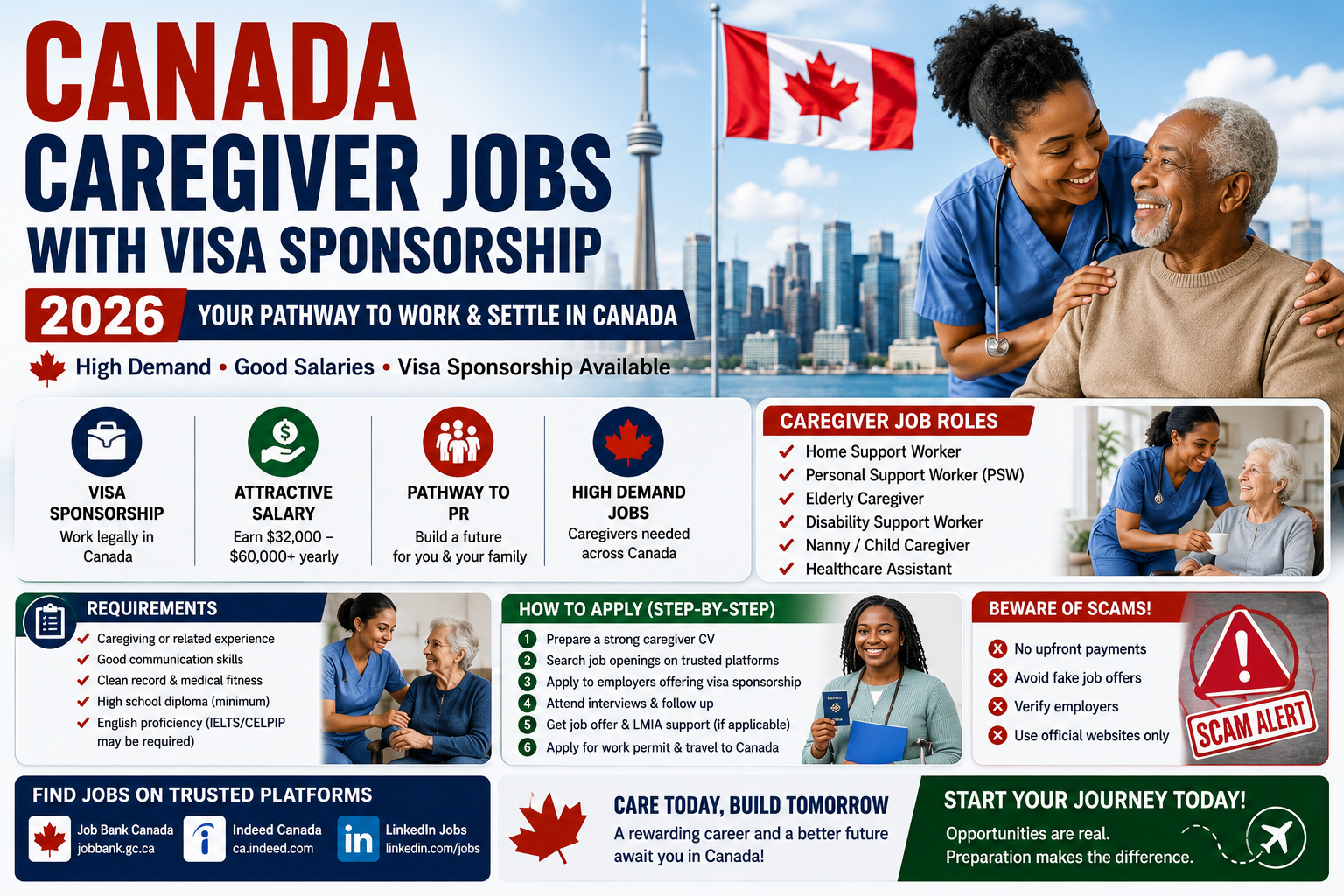
Step-by-Step Guide: How to Apply for Caregiver Jobs in Canada from Nigeria
Step 1: Honest Self-Assessment
Before spending a single naira, evaluate your actual situation in writing. Do you have documented care experience — paid, verifiable, and aligned with NOC 44100 or 44101? What is your current IELTS score, or your estimated level? Do you have an educational credential that WES can assess? Know your starting point.
Step 2: Credential Evaluation
If you have a post-secondary diploma or degree in nursing, public health, social work, or a related field, get it evaluated by WES (wes.org) or another IRCC-designated body. Applications go directly through the WES website — there are no authorised local agents in Nigeria. Anyone claiming to be a WES representative charging a local fee is running a scam.
Step 3: IELTS Preparation and Testing
Book the IELTS General Training test. Aim for CLB 6 (approximately 6.0 overall) rather than the minimum CLB 5. A higher score opens more programs, makes you more attractive to employers, and speeds up certain pilot program applications. British Council and IDP both administer IELTS in Lagos, Abuja, and Port Harcourt. Allow 8–12 weeks of structured preparation.
Step 4: Build a Canadian-Format Resume
Nigerian CV formats do not translate directly. A Canadian resume is 1–2 pages maximum, contains no photo, no date of birth, no marital status, and focuses on measurable responsibilities and outcomes. Research PSW or home support worker resume templates specific to Canada. Your cover letter should name the province you are targeting, mention the specific client population, and explain why caregiving is a deliberate career choice — not a desperation move.
Step 5: Search for Legitimate Employers
Use only verified platforms (see the job boards section below). Focus on employers who explicitly state LMIA-approved positions or who are registered agencies with verifiable Canadian business numbers. Cross-reference every listing independently — look up the employer name on provincial business registries before engaging.
Step 6: Apply Directly
Do not use third-party agents to send your application. Apply directly through the employer’s listed contact or the job board. Your application package: CV, tailored cover letter, copies of relevant certificates, and IELTS score. Generic applications are immediately obvious. Three well-targeted applications outperform thirty rushed ones.
Step 7: Prepare for Video Interviews
Canadian employers typically conduct video interviews via Zoom or Teams. Test your audio and lighting in advance. Dress professionally. Prepare specific answers to behavioural questions — “Tell me about a time you handled a difficult client situation” is common. Emphasise patience, reliability, empathy, and communication. Have examples ready from any caregiving, healthcare support, or domestic experience you hold.
Step 8: Secure a Formal Job Offer and LMIA Confirmation
A legitimate employer provides a written job offer letter on company letterhead that includes: your name, job title, duties aligned with the correct NOC, hourly wage, work hours, start date, and employer contact details. Once LMIA is approved, they provide the LMIA reference number. Do not proceed without both documents in hand.
Step 9: Apply for Your Work Permit
Using the official IRCC portal (canada.ca), submit your work permit application online. Required documents:
- Valid passport (at least two blank pages)
- Job offer letter
- LMIA details or program-specific exemption documentation
- IELTS results (must be less than two years old)
- Credential evaluation results
- Immigration Medical Examination results from an IRCC-approved panel physician
- Police clearance certificates from Nigeria and every country you have lived in for 6+ months since age 18
- Biometrics fee payment (CAD $85) and work permit application fee (CAD $155)
Submit biometrics at the VFS Global centre in Lagos or Abuja after receiving your biometric instruction letter.
Step 10: Prepare for Relocation
Once approved, practical steps include: booking flights, arranging temporary accommodation for your first 1–2 weeks if no live-in arrangement is in place, pre-arrival bank account setup (some Canadian banks allow this from Nigeria), and researching your province’s public transit and cost-of-living basics. Nigerian and African diaspora community groups in your destination city are genuinely valuable for the first few months — seek them out.
Best Job Platforms to Find Legitimate Caregiver Jobs in Canada
| Platform | URL | What to Look For |
|---|---|---|
| Job Bank Canada | jobbank.gc.ca | Government-operated; filter for LMIA-approved postings |
| Indeed Canada | ca.indeed.com | Search “caregiver LMIA” or “home support worker sponsorship” by province |
| Workopolis | workopolis.com | Long-established Canadian board; mix of agency and direct employer listings |
| Care.com Canada | care.com/ca | Specifically for caregiver, nanny, and senior care roles in private households |
| CanadianNanny.ca | canadiannanny.ca | Child care provider roles; some families open to LMIA process after interview |
| BC Care Providers | bccareproviders.ca | BC-specific; links to member care facilities hiring PSWs |
| linkedin.com | Direct outreach to Canadian home care agencies is effective here | |
| IRCC Employer Portal | canada.ca | Verify if employers are participating in caregiver pilot programs |
Core rule: Any legitimate Canadian employer posting a sponsored caregiver role has a verifiable Canadian business number. Always cross-reference listings before engaging.
Common Scams Targeting Nigerian Caregiver Job Seekers
This section may be the most important in the entire article. Fraud in this space is widespread and specifically targets people with genuine ambition and limited financial buffer.
The Upfront Fee Scam
An “agency” in Lagos or online asks for ₦200,000–₦1,000,000 to “process your LMIA” or “secure your Canadian employer.” Real employers pay for the LMIA — not you. Full stop.
Fake LMIA Letters
Professionally designed PDF documents with Canadian company logos, business addresses, and phone numbers — all fabricated. Always call the company directly using a number you find independently (not the one in the letter) to confirm the offer is genuine.
Visa Guarantee Scams
No private individual or agency can guarantee a Canadian visa. Only IRCC approves visas. Any agent promising approval is either lying or operating illegally.
Inflated Salary Promises
Entry-level caregiver offers claiming CAD $6,000–$8,000 monthly are designed to excite you past your better judgment. Real entry-level offers are fair but not extraordinary.
WhatsApp and Telegram Recruitment
Legitimate Canadian employers do not recruit through WhatsApp broadcasts or Telegram groups. If initial contact came through a group forward, treat it as suspicious until independently verified.
Embassy Slot Scams
Claims to book Canadian visa appointments faster or “guarantee” a High Commission slot. Embassy appointments are booked directly through the IRCC system or VFS Global — no third party has privileged access to either.
Credential Evaluation Fraud
Fake “WES representatives” charging to submit your documents locally. WES only accepts applications directly through their official website at wes.org. There are no authorised local agents anywhere in Nigeria.
Red Flags Summary
- Payment requests before a confirmed job offer
- Communication only through personal Gmail or Yahoo addresses rather than a company domain
- No verifiable Canadian business registration number
- Pressure to act within 24–48 hours
- Promises of guaranteed visa approval or immediate permanent residence
- Recruitment exclusively through social media direct messages
Report fraud to the Canadian Anti-Fraud Centre (antifraudcentre.ca) and the Consumer Protection Council of Nigeria (cpcnigeria.org).
Cost of Relocating from Nigeria to Canada as a Caregiver
Migration involves real costs. Budget honestly before starting.
| Expense | Estimated Cost |
|---|---|
| IELTS General Training | ₦130,000–₦150,000 |
| Educational Credential Assessment (WES) | ₦120,000–₦180,000 |
| Immigration Medical Examination | ₦50,000–₦80,000 |
| Police Clearance Certificates | ₦15,000–₦30,000 |
| Biometrics Fee (CAD $85 equivalent) | ~₦37,000 |
| Work Permit Application Fee (CAD $155 equivalent) | ~₦70,000 |
| Translation and Notary Services | ₦20,000–₦50,000 |
| One-Way Flight to Canada | ₦600,000–₦900,000 |
| Initial Settlement Reserve | Approximately CAD $2,000–$3,000 |
Add a 20% contingency buffer above these figures to account for exchange rate movement and unexpected delays. The total outlay before landing is significant — approaching ₦1.5–2 million for a well-prepared applicant. Know this before you begin.
Expert Tips to Improve Your Application Success
Get a First Aid and CPR Certificate Before Applying. Many Canadian employers require it, and obtaining it before submitting applications signals initiative. Red Cross certification is widely recognised.
Target Mid-Sized Agencies Before Private Households. For your first Canadian role, registered home care agencies offer better labour protections, more structured onboarding, and more consistent hours than private household arrangements.
Build a Care Portfolio, Not Just a CV. A standard CV lists jobs. A portfolio includes training certificates, a personal care statement explaining why you chose caregiving, and a written reference from anyone you have supported — a neighbour, family member, or previous employer. It shows depth that a CV cannot.
Apply to Smaller Provinces Strategically. Ontario gets the most attention, but competition is also fiercest there. Manitoba, New Brunswick, and Nova Scotia have active caregiver recruitment, lower applicant volumes, and strong PNP pathways that can accelerate permanent residence.
Time Your Applications to Hiring Seasons. Canadian families often seek caregivers before school resumption (August–September) and after the holiday break (January). Contacting employers during these windows increases your chances of reaching someone with genuine urgency.
Optimise LinkedIn Properly. Many Canadian recruiters search candidates directly on LinkedIn. Use a professional photo, healthcare-relevant keywords in your headline and summary, and a detailed experience section with Canadian-specific terminology like “personal support,” “ADL assistance,” and “elder care.”
Secure Reference Letters Now. If you have ever worked in caregiving, healthcare, or domestic support in Nigeria, request reference letters on institutional letterhead immediately. Canadian employers weight references heavily. The more specific they are — naming client type, duties, and duration — the stronger the impact.
Common Mistakes That Lead to Rejection
Using the Wrong NOC Code. Your job offer must align with either NOC 44100 or 44101. A vague “domestic helper” title triggers classification issues that can result in a work permit refusal. Confirm the code using the official NOC search tool on canada.ca before submitting anything.
Submitting Expired IELTS Scores. Language test results are valid for two years. A perfect score on an expired TRF is an invalid document to IRCC.
Inconsistent Documents. A date discrepancy between your passport and your credential evaluation, or a reference letter that contradicts your CV employment dates, is enough to trigger a refusal. Review every document side by side before submission.
Missing Police Certificates. You need a clearance for every country you have lived in for six months or more since turning 18. Overlooking a certificate from a brief foreign stay is one of the most common avoidable refusal reasons.
Paying Agents to Submit Applications. Beyond the fraud risk, agents who submit “on your behalf” often introduce inaccurate information carelessly gathered from you. Immigration applications are legal documents — errors have consequences. If you use an immigration consultant, verify their registration with the College of Immigration and Citizenship Consultants (CICC) at college-ic.ca before paying anything.
Ignoring Smaller Provinces. Applicants who fixate on Toronto miss consistently available opportunities in cities like Winnipeg, Halifax, and Fredericton, where caregiver demand is real and competition is lower.
People Also Ask
Can Nigerians apply for caregiver jobs in Canada? Yes. There are no nationality-based restrictions for Canadian caregiver positions. Nigerian applicants are eligible for all relevant work permit and immigration programs provided they meet stated requirements.
Is IELTS mandatory for caregiver jobs in Canada? For most visa pathways, yes. CLB 5 (approximately IELTS 5.0 in each band) is the general minimum for work permits. CLB 7 is required for PR applications under the dedicated caregiver pilots. Some employers may assess English ability through interview, but immigration applications require formal test results.
Do Canadian employers pay for LMIA sponsorship? Yes. The cost of the LMIA application falls entirely on the employer. Any agent or employer demanding payment from you for LMIA processing is committing fraud.
Which province pays caregivers the most? British Columbia and Ontario offer the highest hourly rates, but also carry the highest living costs. Alberta offers competitive wages with no provincial sales tax and lower living costs. Manitoba and Nova Scotia offer lower wages but with significantly lower competition and living expenses.
Frequently Asked Questions
What is the difference between a caregiver and a PSW? A caregiver is a broad term covering anyone providing personal support or companionship. A Personal Support Worker (PSW) typically has more structured healthcare responsibilities and may work under supervision of registered nurses in clinical settings. PSW roles often require additional certification.
Are there caregiver jobs in Canada without experience? Entry-level positions as companions, household assistants, or childminders exist that do not require formal experience. However, no experience reduces visa pathway eligibility and makes the application significantly more competitive. Short courses, volunteer work with elderly or disabled individuals, and any documented informal care experience strengthen your profile meaningfully.
Can I bring my family to Canada as a caregiver? Under the dedicated caregiver pilot programs, your spouse or common-law partner may be eligible for an open work permit, and dependent children can qualify for study permits. Under a standard employer-specific work permit, family members may apply for visitor or study visas separately.
What happens after my work permit expires? Under the pilot programs, workers who accumulate 24 months of qualifying experience can apply for permanent residence. You can also apply to extend your work permit while a PR application is in progress under “maintained status.” Canadian PR grants the right to live and work anywhere in Canada and is the gateway to eventual citizenship.
Are there live-in caregiver jobs in Canada with free accommodation? Yes, across all provinces. In live-in arrangements, employers provide private accommodation as part of the compensation package. Provincial regulations govern how much can be deducted from wages for room and board, and these deductions are capped by law.
How long does the Canadian caregiver visa take from Nigeria? LMIA processing takes 8–12 weeks on the employer’s side. Work permit processing after LMIA issuance averages 8–16 weeks. Total time from confirmed job offer to visa stamp is approximately 5–6 months under normal conditions.
Conclusion
Canada caregiver jobs with visa sponsorship represent a real, structured pathway — not a shortcut, and not a miracle. The demand is documented. The immigration frameworks are in place. The opportunity exists for qualified, prepared applicants who treat the process with the seriousness it deserves.
What is equally real is the difficulty. IELTS preparation takes months. Credential verification takes time and money. Finding a legitimate employer from Nigeria requires careful research and strong scam awareness. The people who succeed are the ones who prepare before they apply — not the ones who move fastest.
Your practical next steps:
- Assess your qualifications and English proficiency honestly.
- Register for IELTS preparation if you have not already done so.
- Begin a WES credential evaluation if you hold a post-secondary qualification.
- Create accounts on Job Bank Canada and Indeed Canada and start reviewing legitimate listings.
- Verify any immigration consultant through the CICC registry at college-ic.ca before engaging.
There is no guaranteed easy route. But for those willing to do the work, the pathway is clearer than it has ever been.