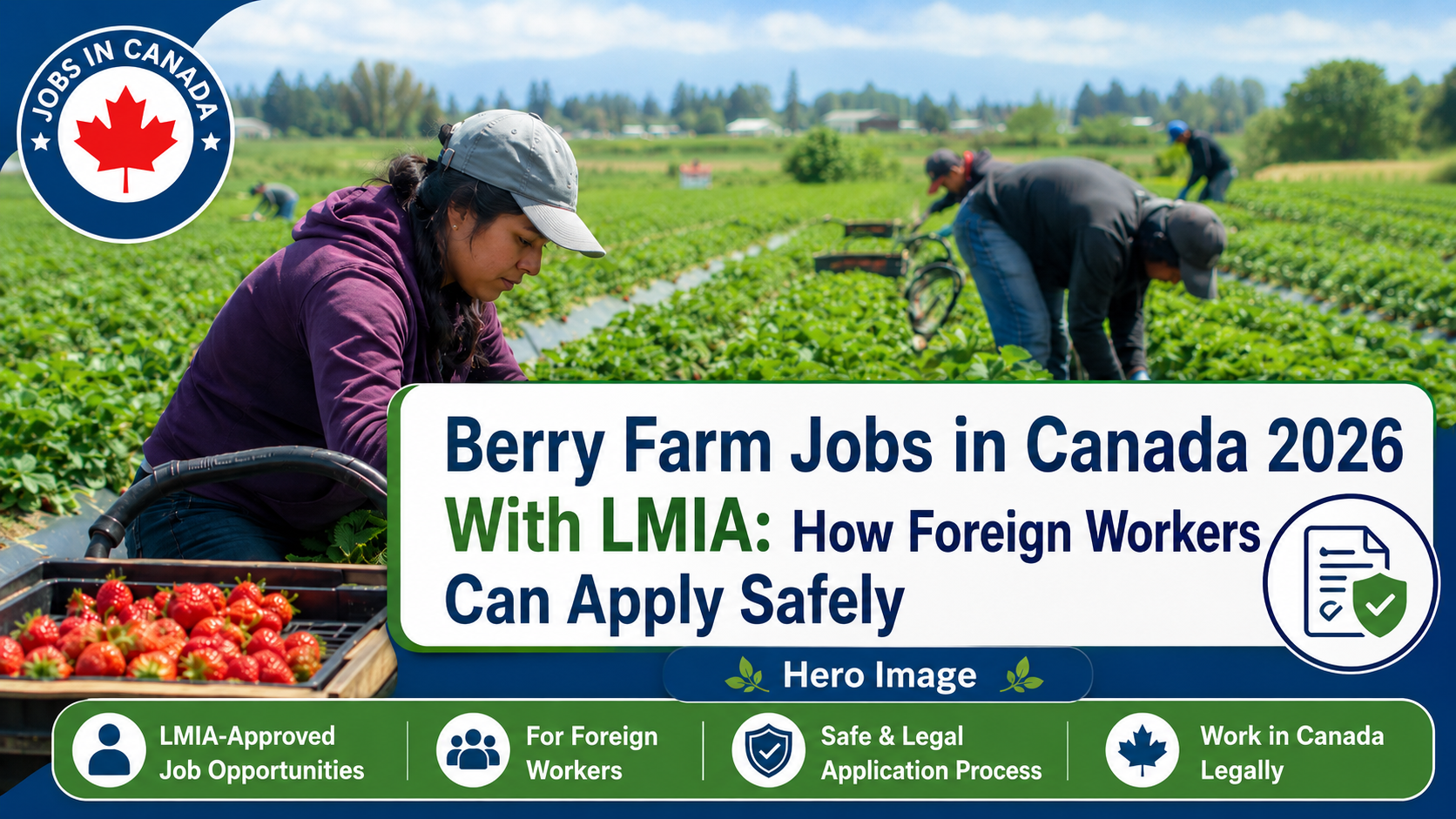
Berry Farm Jobs in Canada 2026 With LMIA: How Foreign Workers Can Apply Safely
Canada Berry Picker Jobs 2026: Visa Sponsorship, LMIA and Safe Application Guide

Introduction
Berry Farm Jobs in Canada 2026 are attracting many foreign workers because the work is seasonal, practical, and often easier to understand than highly skilled roles. But before applying, you need to know how LMIA works, where to find real employers, what documents to prepare, and how to avoid fake recruitment offers.
Many applicants make the mistake of searching only for “visa sponsorship jobs” and applying to random posts on social media. That can be risky. A better approach is to understand how Canada’s agricultural hiring system works, especially the Temporary Foreign Worker Program, the Seasonal Agricultural Worker Program, and employer-specific work permits.
RECOMMENDED POST: Food Packer Jobs in USA With Visa Sponsorship 2026 for Nigerians
This guide explains berry farm jobs in Canada, common duties, LMIA basics, salary expectations, provinces to target, documents needed, safe application steps, and recruitment red flags.
Quick Answer: What Are Berry Farm Jobs in Canada 2026?
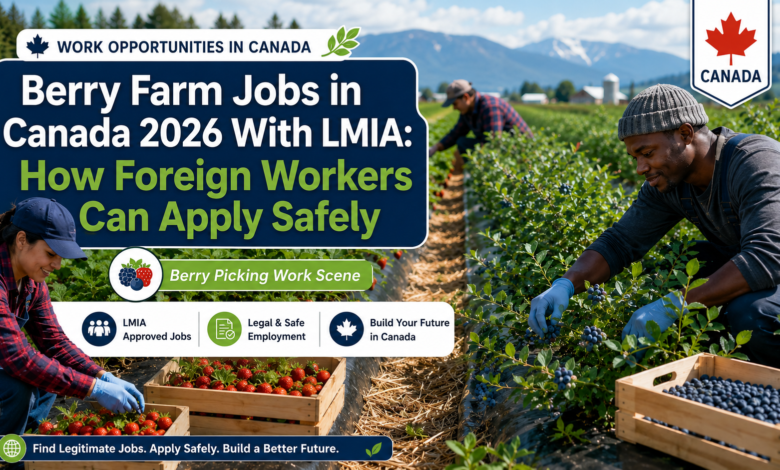
Berry farm jobs in Canada 2026 are seasonal agricultural jobs where workers plant, pick, sort, pack, and harvest berries such as strawberries, blueberries, raspberries, and cranberries. Foreign workers may apply when a Canadian employer has LMIA support or uses an approved agricultural worker program.
What Are Berry Farm Jobs in Canada 2026?
Berry farm jobs are agricultural roles connected to the growing, harvesting, sorting, packing, and handling of berry crops. These jobs are common during planting and harvesting seasons, although some farms also need workers for greenhouse support, packaging, cleaning, and crop maintenance.
Common berry farm roles include:
- Strawberry picker
- Blueberry picker
- Raspberry harvester
- Cranberry farm worker
- Fruit packer
- Greenhouse worker
- General farm labourer
- Harvesting labourer
- Farm equipment assistant
- Crop sorting and grading worker
The work is usually hands-on. You may spend long hours standing, bending, lifting, carrying baskets or crates, and working outdoors in different weather conditions. For that reason, this type of job is better for applicants who are physically fit, patient, and prepared for repetitive seasonal tasks.
Canada’s Job Bank groups fruit or vegetable picker jobs under harvesting labourers, NOC 85101, which makes this a useful category for applicants researching farm jobs in Canada.
Are Berry Farm Jobs in Canada Open to Foreign Workers?
Yes, some berry farm jobs in Canada can be open to foreign workers, but not every farm job automatically comes with visa support or LMIA approval.
Canadian employers may hire temporary foreign workers when they cannot find enough Canadians or permanent residents to fill available roles. The Government of Canada’s Seasonal Agricultural Worker Program allows approved employers to hire temporary foreign workers for seasonal agricultural work when Canadians and permanent residents are not available.
There are different pathways depending on how the worker is hired. Some agricultural workers are hired through the Seasonal Agricultural Worker Program, while others may apply for an employer-specific work permit, which usually limits them to the employer named on the permit.
This is why applicants must be careful. A job post saying “Canada farm jobs with sponsorship” is not enough. You should check whether the employer is real, whether the position is eligible, and whether the employer has obtained or applied for an LMIA where required.
RECOMMENDED POST: Salary Negotiation for International Employees 2026: How to Ask for What You Deserve Abroad
How LMIA Works for Berry Farm Jobs in Canada
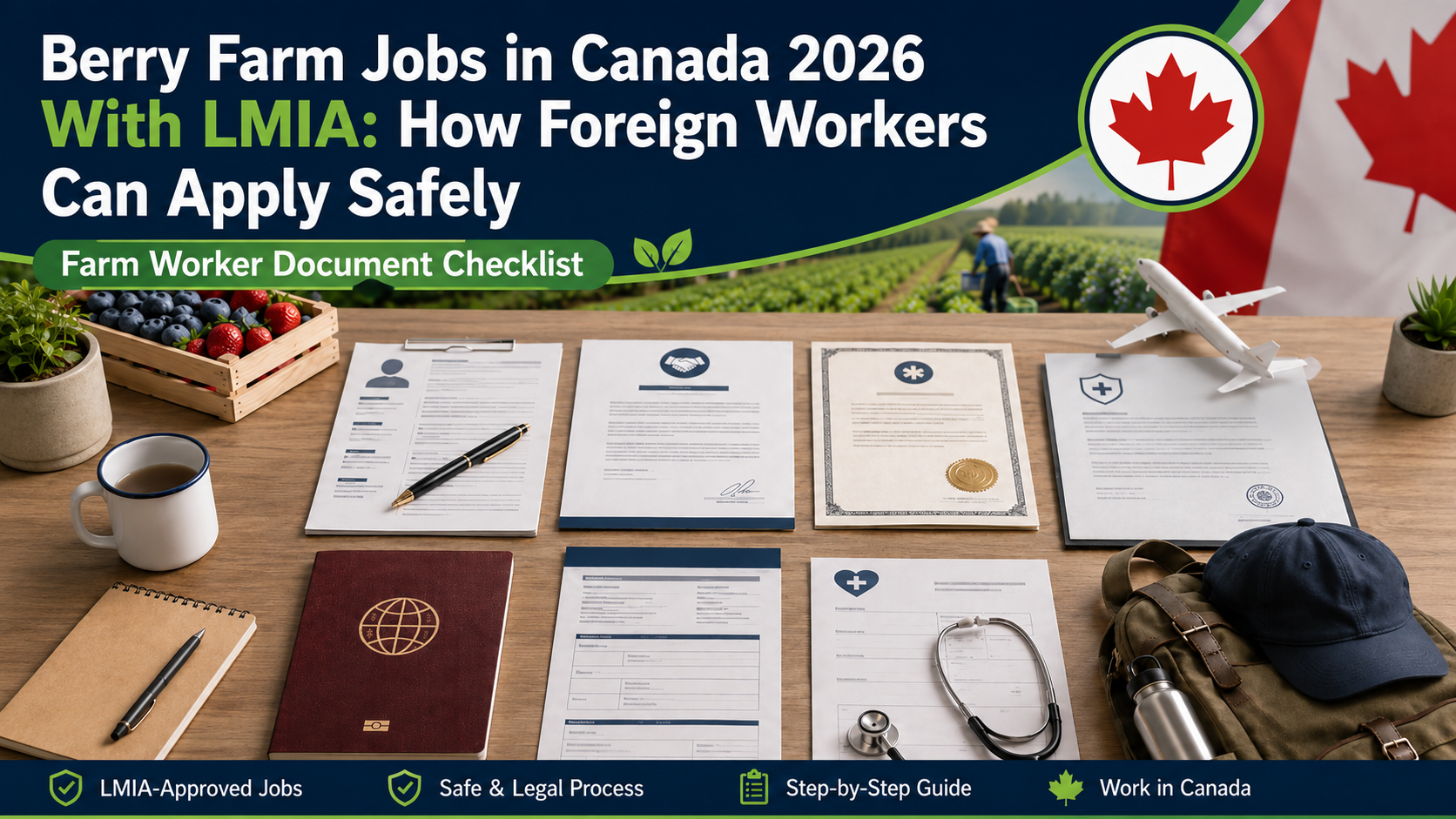
LMIA means Labour Market Impact Assessment. It is a document that a Canadian employer may need before hiring a foreign worker.
A positive LMIA shows that there is a need for a foreign worker to fill the job and that no Canadian worker or permanent resident is available to do it. If an employer needs an LMIA, the employer must apply for it.
For berry farm jobs, LMIA is usually connected to the employer’s need for seasonal or agricultural labour. The employer does not simply give the worker an LMIA casually. The employer must follow the correct Temporary Foreign Worker Program process.
| LMIA Point | What It Means for Applicants |
|---|---|
| LMIA is employer-driven | The Canadian employer usually applies, not the worker. |
| Positive LMIA supports work permit application | It can help the worker apply for a work permit. |
| Not all farm jobs have LMIA | Some postings are for local workers only. |
| LMIA does not guarantee visa approval | The worker must still meet immigration requirements. |
| Applicants must verify job offers | Fake LMIA offers are common online. |
Berry Farm Jobs in Canada 2026 Salary and Work Conditions
Pay for berry farm jobs in Canada varies by province, employer, commodity, season, experience, and hours worked. Some workers are paid hourly, while some agricultural roles may involve piece-rate or production-based pay depending on the employer and provincial rules.
Applicants should always check the current wage information, job posting details, and provincial employment rules before accepting an offer.
| Job Role | Common Duties | Possible Work Type |
|---|---|---|
| Berry Picker | Picking ripe berries by hand | Seasonal |
| Farm Labourer | Planting, cleaning, loading, harvesting | Seasonal or full-time |
| Fruit Packer | Sorting, grading, packing produce | Seasonal |
| Greenhouse Worker | Plant care, watering, trimming | Seasonal or year-round |
| Harvesting Labourer | Field harvesting and crop handling | Seasonal |
| Crop Sorter | Separating fruit by size, quality, or condition | Seasonal |
| Farm General Helper | Cleaning, loading, moving produce, supporting farm teams | Seasonal or full-time |
Applicants should also understand that farm work can include early mornings, weekend schedules, outdoor conditions, repetitive movements, and physical effort. This is not an office job. The advantage is that some roles may not require a university degree, but the work still requires discipline and reliability.
Best Canadian Provinces for Berry Farm Jobs
Some provinces have stronger demand for berry, fruit, vegetable, and greenhouse workers because of their agricultural production.
British Columbia
British Columbia is known for fruit, berries, vineyards, and greenhouse farming. Applicants may find roles related to blueberries, strawberries, raspberries, and general fruit harvesting.
Ontario
Ontario has a large agricultural sector with fruit, vegetable, greenhouse, packing, and harvesting roles. Applicants can search for farm worker, fruit picker, and harvesting labourer roles across different regions.
Quebec
Quebec has seasonal agriculture opportunities, including fruit and vegetable farms. French language ability may help in some areas, although requirements depend on the employer and role.
Nova Scotia
Nova Scotia has berry and fruit production, including seasonal farm work and packing jobs.
New Brunswick
New Brunswick may offer seasonal agricultural roles connected to berries, vegetables, and farm labour.
Prince Edward Island
Prince Edward Island has agricultural work opportunities, especially seasonal field and crop-related roles.
Applicants should not limit themselves to one province. Search by job title, crop type, and NOC category. Use terms like “fruit picker,” “farm worker,” “harvesting labourer,” “berry picker,” “agricultural labourer,” and “farm worker fruit.”
RECOMMENDED POST: Food Packer Jobs in USA With Visa Sponsorship 2026 for Nigerians
Requirements for Berry Farm Jobs in Canada 2026
Berry farm jobs do not always require advanced education, but employers still expect dependable workers who can follow instructions and handle physical tasks.
Common requirements may include:
- Physical fitness
- Ability to work outdoors
- Ability to stand, bend, lift, and repeat tasks
- Basic English or French communication skills
- Farm experience, if required by employer
- Valid passport
- Clean background record, if requested
- Ability to follow safety instructions
- Willingness to work seasonal hours
- Readiness to live near the farm or employer-provided housing, where applicable
Some employers may prefer applicants with previous farm work experience. Others may train workers on the job. Read each job description carefully before applying.
Documents Needed for LMIA Berry Farm Jobs in Canada
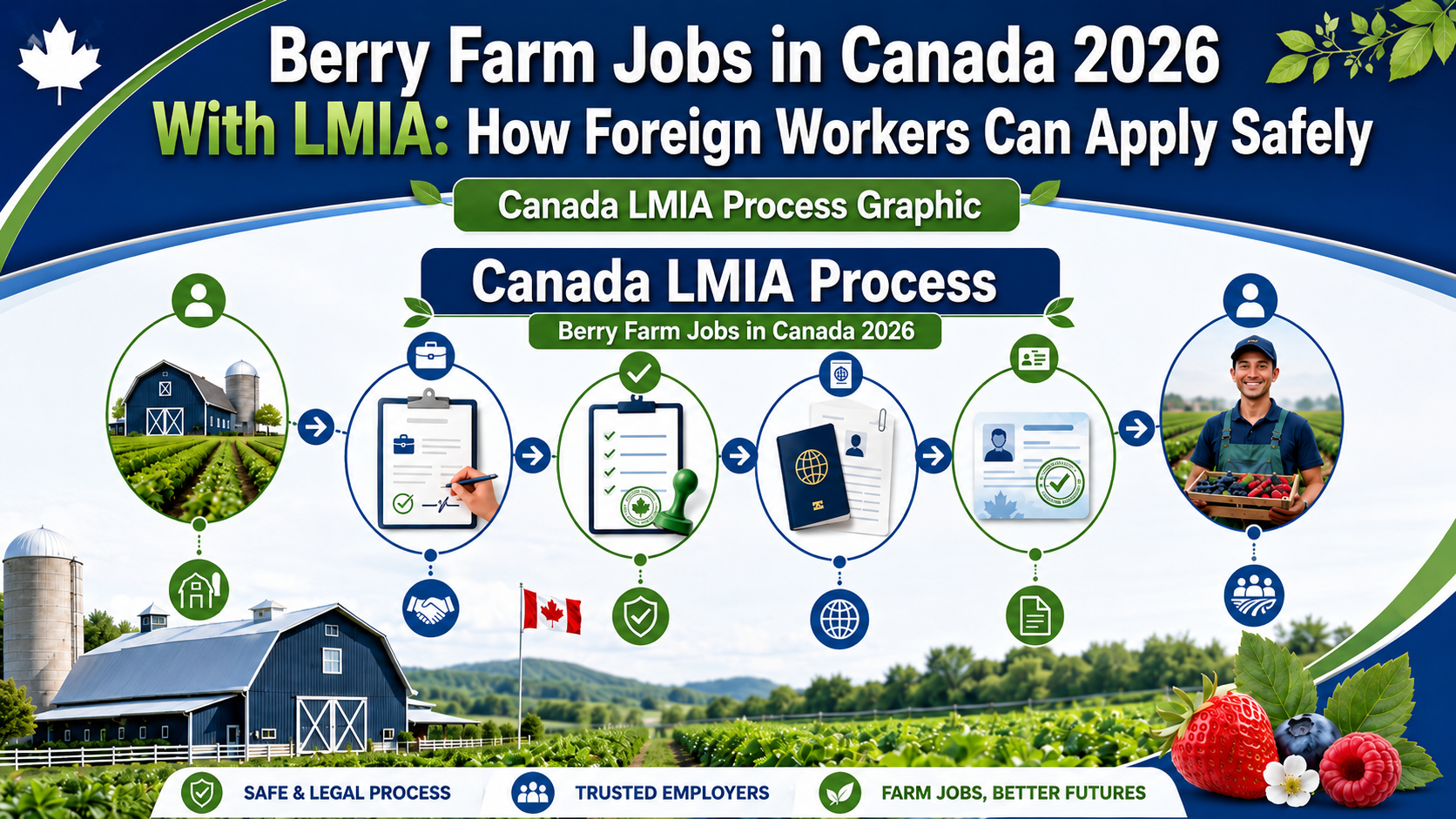
Prepare your documents before you start applying. Many applicants lose opportunities because they cannot send a clean CV, valid passport copy, or proof of experience quickly.
| Document | Why It Matters |
|---|---|
| Valid passport | Needed for international travel and work permit processing. |
| Farm worker CV | Shows your work history and practical skills. |
| Work experience letter | Helps prove previous farm, labour, or packing experience. |
| Training certificate | Useful if you have agriculture, safety, or machinery training. |
| Police clearance | May be requested during immigration or employer screening. |
| Medical exam | May be required depending on the job and immigration rules. |
| Job offer letter | Shows the employer’s offer and job details. |
| LMIA confirmation | Supports work permit process where applicable. |
| Work permit documents | Needed for official application. |
| Proof of funds | May be requested depending on your situation. |
Keep all documents clear, readable, and truthful. Do not submit fake experience letters or altered certificates. If an employer or visa officer checks and finds false documents, it can damage your future applications.
Where to Find Real Berry Farm Jobs in Canada
The safest place to begin is official and verified job sources.
Good sources include:
- Canada Job Bank
- Job Bank Temporary Foreign Worker page
- Official employer websites
- Provincial agriculture job boards
- Licensed recruiters
- Farm association websites
- Verified company career pages
Canada Job Bank has a dedicated Temporary Foreign Workers section where users can search jobs from Canadian employers that have already obtained or applied for an LMIA.
When using any job board, check:
- Employer name
- Business address
- Job location
- Wage details
- Duties
- Work hours
- LMIA status, if shown
- Application method
- Company website
- Whether the recruiter is licensed, if using an agency
Avoid relying only on social media screenshots or WhatsApp messages.
How to Apply for Berry Farm Jobs in Canada From Abroad
Step 1: Prepare a Simple Farm Worker CV
Your CV should be clear and direct. Include your full name, contact details, work experience, farm or packing experience, physical work skills, language ability, passport status, availability, and references if available.
Do not overdesign your CV. Farm employers need to quickly see what you can do.
Step 2: Search Verified Job Boards
Start with official sources like Canada Job Bank and employer career pages. Use job titles such as:
- Berry picker
- Fruit picker
- Farm worker fruit
- Harvesting labourer
- Agricultural labourer
- Fruit packer
- Greenhouse worker
Step 3: Check Whether the Employer Hires Foreign Workers
Look for posts that mention LMIA, Temporary Foreign Worker Program, or willingness to hire international applicants. Do not assume every farm job is open to foreign workers.
Step 4: Apply Directly Through Official Channels
Use the application email, employer website, or job board instructions. Avoid sending personal documents to unknown WhatsApp numbers.
Step 5: Avoid Paying for Fake Job Offers
A real employer should not ask you to pay for a fake offer letter, fake LMIA, or guaranteed visa slot. Be careful with anyone asking for money before giving official documents, employer details, or a verifiable job offer.
Step 6: Attend Interview if Shortlisted
Some employers may interview by phone or video. Prepare to answer simple questions about your experience, availability, physical fitness, and understanding of farm work.
Step 7: Confirm LMIA or Work Permit Support
Ask clear questions before accepting any offer. You may ask:
- Is the employer applying for an LMIA?
- Has the LMIA already been approved?
- What is the job title and NOC?
- Is the contract official?
- What are the wages and hours?
- Is housing provided?
- Who pays for transportation?
- What deductions apply?
Step 8: Follow the Official Work Permit Process
If you receive a valid job offer and LMIA support where required, follow official immigration instructions. Do not depend only on agents or social media advice.
Common Mistakes Foreign Applicants Make
Many international applicants reduce their chances because they rush the process.
Using One Generic CV
A CV for farm work should highlight physical labour, harvesting, packing, warehouse, cleaning, livestock, greenhouse, or outdoor experience. Do not send a CV that only talks about office work unless you also explain your practical experience.
Applying to Fake Facebook Job Posts
Some posts use stolen farm photos and fake promises. Always verify the company.
Paying Recruiters Before Verification
Be careful with anyone asking for money before giving official documents, employer details, or a verifiable job offer.
Believing Guaranteed Visa Promises
No recruiter can guarantee Canada visa approval. LMIA and job offers may support an application, but immigration authorities still decide.
Ignoring Job Requirements
If a job requires experience, language ability, or availability during a specific season, do not ignore those requirements.
Using Poor Resume Formatting
Make your CV simple. Avoid heavy graphics, long paragraphs, and unrelated details.
Not Checking Employer Details
Search the employer name, address, website, and job posting. If details do not match, be careful.
Confusing Visitor Visa With Work Permit
A visitor visa does not allow you to work in Canada. Most foreign workers need the correct work authorization.
Recruitment Scam Warnings
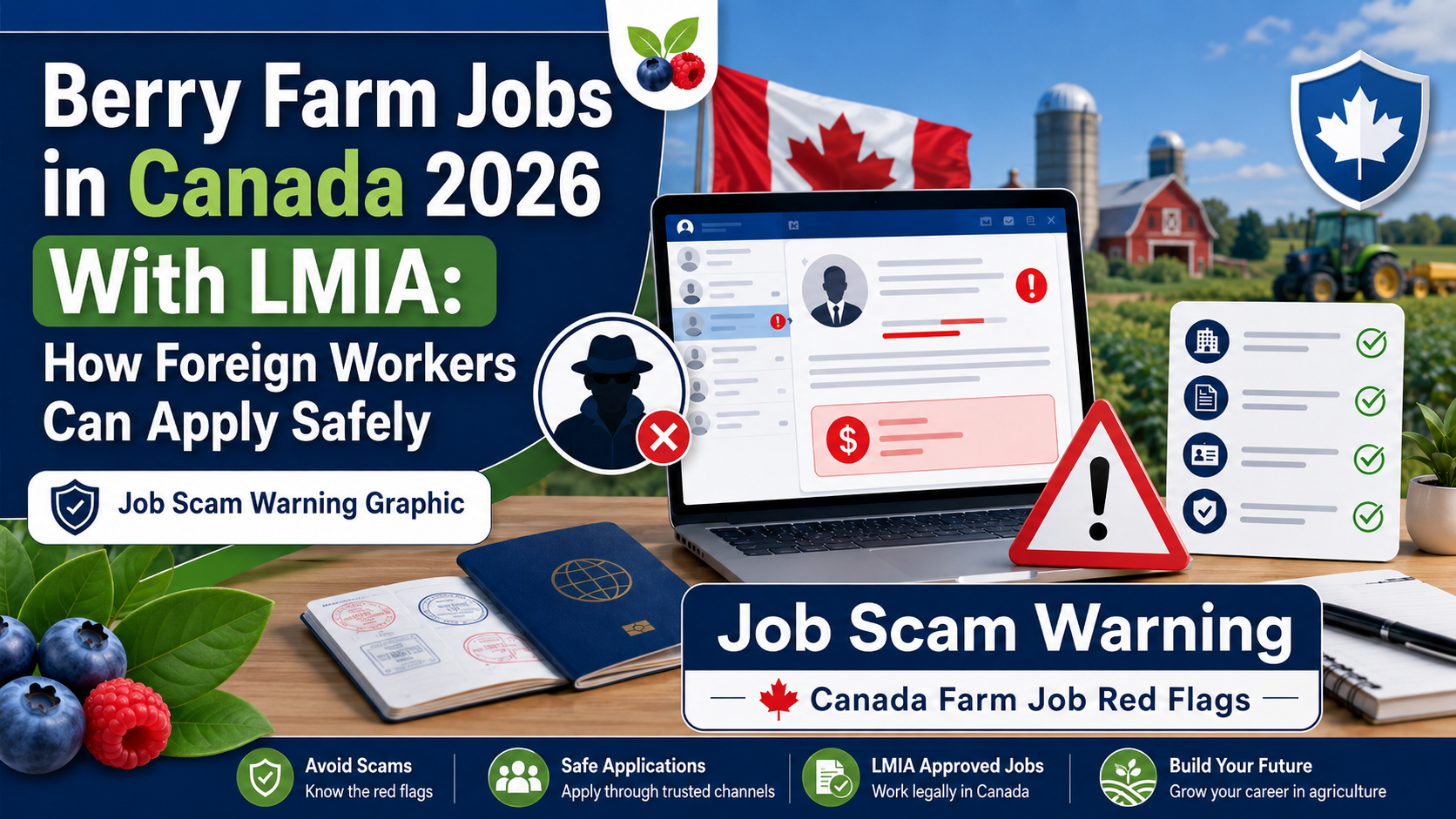
Recruitment scam warnings are very important for foreign applicants. Many job seekers lose money because they want to travel quickly and believe unrealistic promises.
Be careful if you see:
- “Guaranteed Canada farm job”
- “Pay now for LMIA”
- “No interview needed”
- “No documents required”
- “Visa guaranteed in 7 days”
- “Only WhatsApp application”
- “Send passport and payment immediately”
- “No company name provided”
- “Salary too high for normal farm work”
- “Recruiter refuses video call or official email”
A real job offer should include clear employer details, work location, wages, duties, hours, and conditions. Also check whether the job appears on official job boards or employer career pages. If someone sends you a “Canada farm job” offer but the employer cannot be verified, stop and investigate.
Health Insurance and Travel Preparation for Seasonal Farm Workers
Seasonal farm work is physical. Workers may be outdoors, lift produce, bend for long periods, and work in changing weather. That is why health preparation matters.
Before traveling, understand:
- Medical coverage arrangements
- Employer responsibilities
- Provincial health insurance waiting periods
- Private health insurance, where needed
- Emergency medical costs
- Workplace safety rules
- Housing conditions
- Transportation arrangements
- Protective clothing and weather needs
This is also a relevant place to mention travel insurance and health insurance education, but keep it helpful and factual. Do not promote any insurance plan unless you clearly understand the reader’s situation and the policy terms.
Temporary foreign workers should also know their rights. Workers should understand their contract, ask questions before traveling, and keep copies of important documents.
Expert Tips for Foreign Workers Applying for Berry Farm Jobs
1. Apply Before Peak Harvest Season
Seasonal employers often plan ahead. Do not wait until the harvest has already started.
2. Use the Right Job Titles
Search for more than “berry farm jobs.” Use terms like “fruit picker,” “farm worker fruit,” “harvesting labourer,” and “agricultural labourer.”
3. Keep Your CV Practical
Farm employers want to know whether you can do the job. Mention physical work, outdoor work, packing, cleaning, loading, harvesting, or warehouse experience.
4. Check the Employer Carefully
A real employer should have a business identity. Look for an address, website, phone number, and official email.
5. Do Not Pay for Fake LMIA Documents
LMIA is handled through official employer processes. Be suspicious of anyone selling “LMIA slots.”
6. Understand the Contract Before Accepting
Check wages, hours, housing, deductions, transportation, medical coverage, and job location.
7. Be Honest About Your Experience
Do not claim you have farm experience if you do not. Instead, highlight transferable skills such as physical stamina, warehouse work, cleaning, packing, teamwork, and reliability.
FAQs About Berry Farm Jobs in Canada 2026
Are berry farm jobs in Canada available for foreigners?
Yes, some berry farm jobs may be available for foreign workers when Canadian employers use the appropriate agricultural worker program or LMIA process. However, not every farm job is open to foreign applicants, so applicants must verify the employer and job posting.
Do berry farm jobs in Canada require LMIA?
Many foreign workers hired through the Temporary Foreign Worker Program need LMIA-supported employment. However, the exact process depends on the agricultural stream, employer, country agreements, and work permit type.
How much do berry pickers earn in Canada?
Pay varies by province, employer, crop type, hours, and wage rules. Applicants should check the job posting and current agricultural wage information before accepting an offer.
Can I apply for berry farm jobs in Canada without experience?
Some employers may accept applicants without direct farm experience, especially for entry-level seasonal roles. However, physical fitness, reliability, and willingness to follow instructions are important. Previous farm, warehouse, packing, cleaning, or outdoor labour experience can help.
Where can I find real LMIA farm jobs in Canada?
Start with Canada Job Bank, especially the Temporary Foreign Workers section, official employer websites, provincial agriculture job boards, and verified company career pages.
Can berry farm jobs lead to permanent residence?
Possibly, but it depends on the worker’s profile, province, employer, immigration program, language ability, experience, and eligibility. Seasonal farm work should not be presented as a guaranteed permanent residence pathway.
Is Canada berry farm work difficult?
Yes, it can be physically demanding. Workers may stand, bend, lift, and work outdoors for long hours. Applicants should prepare for seasonal schedules and practical farm conditions.
Should I use an agent to apply?
You can apply directly through verified job boards and employer websites. If you use a recruiter or consultant, verify that they are licensed and legitimate. Avoid anyone who promises guaranteed jobs, guaranteed visas, or asks for suspicious upfront payments.
Employment Websites to Find Opportunities
To find job openings at Meadow Berry Farms and similar opportunities in Canada, you can explore various employment websites. Here are some popular platforms where these jobs are regularly posted:
- Indeed (www.indeed.ca): A widely-used job search engine where you can find a variety of agricultural jobs, including those at Meadow Berry Farms.
- Job Bank (www.jobbank.gc.ca): The Canadian government’s official job site, offering listings for LMIA-approved positions across the country.
- WorkBC (www.workbc.ca): A resource for job seekers in British Columbia, providing local job listings and employment resources.
Conclusion: Apply Safely and Prepare Before You Submit
Berry farm jobs in Canada 2026 can be a realistic option for foreign workers who are ready for seasonal agricultural work. The key is to apply safely, understand LMIA, prepare the right documents, and avoid fake recruiters.
Start with verified sources like Canada Job Bank and official employer websites. Prepare a simple farm worker CV, check whether the employer hires temporary foreign workers, and never believe anyone who promises guaranteed visa approval.
A careful application may take longer, but it protects your money, your documents, and your future opportunities.